Bandolim Pernambucano

In my latest entry I mentioned the first cd by Pedro Amorim, 'Pedro Amorim interpreta Luperce Miranda', released 1999 (- not on Arcari, as stated, but) on the French label BUDA, (CD 82897-2). Now I have had an opportunity to listen to it and below I'll add a few words regarding this great recording.
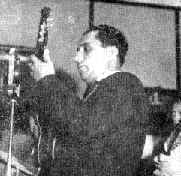

In Brazilian popular music, there are two schools of bandolim: that of Jacob Pick Bittencourt (aka Jacob do Bandolim), and that of Luperce Miranda. Jacob do Bandolim developed great improvisation skills on the instrument like a jazzplayer, and his sound was to some extent influenced by Portuguese guitar playing. Luperce Miranda was more 'Napolitan', more technical and virtuoso in the classical conception of the instrument. Luperce's expression was not as refined as Jacob's, but he showed great capacity at ornamenting the themes he played - this style of playing is known as the 'Bandolim Pernambucano' school, pointing to its regional origins in Brazil.


Luperce Miranda (1904-1977) was from Recife, Pernambuco. His father had founded a family orchestra with his 11 children. Luperce mastered the bandolim at age 12 and started composing at 15, and at age 16 he formated his own 9 piece band. In 1926 he went to Rio de Jaineiro and was soon involved in recording and radio work, accompanying the stars of the day with his own regional. In 1950 Luperce Miranda toured Europe (Germany), and in 1970 he was awarded "Bachelier da Musica Popular Brasileira". Besides his professional career he was a father of 24 children by 4 different wives (- he led parallel lives).

Pedro Amorim (b.1958), composer and multi-instrumentist (bandolim,cavaquinho, guitar and tenor guitar), started as an athlete and a student in Physical Education before he became a professional musician. He had his debut with the No em Pingo d'Aqua choro ensemble in the early 1980'ies and has since played with a lot of renowned Brazilian artists of MPB, favouring choro and samba as musical genres.

To prepare this recording of pieces by Luperce Miranda, Pedro Amorim listened to the recordings by Luperce and studied available original scores, further he developed his playing technique incorporating licks and tricks from Miranda's attitude to the instrument. Together with a group of skilled musicians he then chose a number of Miranda's pieces representing its diversity of styles. The cd contains both choros, frevo, waltzes, samba, embolada a.o - very well executed and most enjoyable. Recommended, definitely. Tracklist and personnel inserted below.

1.NÉA SORRINDO (frevo),2.PICHADINHO À BAIANA (choro).3.PRINCESINHA (valsa),4.AI MARIA (embolada),5.RESPONDE MOACIR (choro),6.BATE PALMAS (choro),7.BUMBA MEU BOI (côco),8.PINÃO (embolada),9.TEZINHA (valsa),10.REBOLICO (choro),11.SEMPRE TE AMANDO (valsa),12.MARTELANDO (choro),13.QUERIDA (chanson)

Personnel: Pedro Amorim (bandolim); Maurico Carillho (violão); Joao Lyre, Adelma Arcoverde (violão caipira); Chiquinho (acc); Marcos Suzano, Durval (perc); Zeca Assumpcão (b)

To illustrate the Bandolim Pernambucano style of playing, I found a solo-performance on YouTube of a piece by Luperce Miranda, also on the cd


I also found an ensemble performance of another piece by Luperce Miranda, enjoy it!

Jo

Violão tenor

The violão tenor - or in English: the tenor guitar is a four stringed instrument normally made in the shape of a guitar, or sometimes with a lute-like pear shaped body or, more rarely, with a round banjo-like wooden body. The instrument can be acoustic and/or electric and it can come in the form of flat top, archtop, wood-bodied or metal-bodied resonator or solid-bodied instruments. Tenor guitars are usually tuned in fifths (usually CGDA, similar to the tenor banjo or the viola), although other tunings are possible, such as "octave mandolin" tuning (GDAE), which makes it easier for a mandolin/bandolim player to use.


In Brazil noted musicians such as Garoto (see picture), Zé Menezes and Claudionor Cruz have used the tenor guitar with great succes, both as a rhtyhm string instrument and as a lead solo guitar. Some sources quote Garoto to be the one, who introduced this instrument in Brazil in 1933, at least he used it extensively on recordings from the late 1930'ies, both with Carmen Miranda and Bando do Lua and in numerous other recording sessions, furthermore Garoto actually wrote a method book on playing the tenor guitar - or violão tenor - still available.


I found a filmed fragment featuring Bando do Lua (- unfortunately without Garoto), the four stringed metal-bodied tenor guitar is audible throughout the performance.


In the contemporary music scene of Brazil the tenor guitar seems to be a rare bird, with notable exceptions. Pedro Amorim is an accomplished bandolim player, who has teamed with the Nó em pingo choro ensemble earlier, made a cd for the Acari label in 1999/2000, ´Violão tenor'(AR-8, iss. 2001), using the acoustic tenor guitar as lead instrument in a repertoire of mostly self omposed choro pieces, accompanied by a small choro ensemble featuring a.o. Luciana Rabello on cavaquinho and Mauricio Carilho on seven string guitar.I highly recommend this cd, both as an example of the tenor guitar in contemporary choro and as a recording of some most delightful music in the great tradition of choro.


As mentioned above, Pedro Amorim is an accomplished bandolim player, his first solo release on the Acari label featured him with this instrument in renditions of pieces by renowned bandolim virtuoso, Luperce Miranda. I haven't listened to this cd, yet, but I found a video performance on YouTube featuring Pedro Amorim playing the bandolim - hope you to enjoy this performance of "Mimosa" by Jacob do Bandolim.


Jo

Nicolas Krassik

Recently my friend, Hans, co-editor of this blog, pointed me to a cd by the young French violin player, Nicolas Krassik, who has excelled his skills in both classical and jazz. However, Krassik also was attracted to Brazilian music and in 2001 he decided to settle in Rio to expand the possibilities of an engagement with the rich musical traditions of Brazil. As a result of this engagement Rob Digital released a cd in 2004 featuring Nicolas Krassik, 'Na Lapa' (Rob Digital, RD066), a marvellous example documenting Krassik's deep involvment with and capacity to use his talents within various Brazilian music idioms, choro as well as other notable genres.


On the mentioned cd Krassik is accompanied by well known Brazilian musicians, João Bosco, Beth Carvalho, Yamandú Costa, Hamilton de Holanda, Carlos Malta, Daniela Spielmann, Chico Chagas, Samuel DeOliveira, Gabriel Grossi, Henrique Cazes a.o.. The repertoire of the performance has compositions by choro superstars like Pixinguinha, Jacob do Bandolim and Garoto, and Krassik also pays his dues to renown Brazilian violinist Fafá Lemos in a performance of Lemos' "Fafá em Hollywood". The performance of the various recorded tunes is great, I highly recommend this cd as a splendid example of contemporary choro and choro related music performed by very skilled musicians in a most enjoyable way. Luckily, Krassik continues his career in Brazil and has just released another cd, 'Caçuá', that further documents his deep involvment with the musical traditions of Brazil. I haven't had the opportunity to listen to this release so far, but I am looking forward to do so in near future.

Learn more about Nicolas Krassik and listen to audio samples from his output at his official web site (- in French and Portuguese only, yet), click here

I found a video performance on YouTube featuring Nicolas Krassik on violin, enjoy it!


Jo

True Love!

Today a great part of the Western world is celebrating Valentine's Day - an American tradition spread around the Western society due to commercial interests, of course. So far I know, the aim of Valentine's Day is to celebrate true love - remember to forward your sweetheart a box of chocolates and a bunch of flowers, then the social bond has been confirmed and tightened between you. The flowers and chocolates are to be viewed as a materialized sign of true love - and that's the point for commercial interests to consider how to get money out of people's pockets, that's part of the game in Western society. However, there are other ways to view examples of true love as a founding element for a social bond between humans. I found a couple of performances of choro on YouTube that express true love, at least this is my humble opinion.
Enjoy an accomplished amateur guitarist displaying true love to music and his instrument in a performance of 'Choro Triste' by Aimoré:


Enjoy also a gathering of an accomplished young bandolim player with a group of elderly musicians in a true social event at a rhoda de choro in Rio's famous "O Bandolim de Ouro"


I wish you all a happy Valentine's Day.
Jo

Epoca de Ouro

The Epoca de Ouro is in fact the band that accompanied Jacob do Bandolim.

Jacob was born in Rio de Janeiro, Brazil in 1918 and became the leading instrumentalist in choro music. He played the bandolim, a kind of mandolin, but it has four double courses of strings and an oval shape. His real name was Jacob Pick Bittencours, but it became Jacob do Bandolim, after the instrument he made famous. In 1961 he formed his group, Epoca de Ouro, which means, Golden Age, to refer to the most important years in choro music. In 1969 Jacob died, but his group survived, with various personel and became an important band in the choro revival tradition.

Deo Rian and Dino Sete Cordas

Thanks to Joergen Larsen, expert in choro music ( founder and editor of this web log) I was pointed to a CD titled Epoca de Ouro - Dino 50 anos. (EMI 214503 ) The recording date for this album is 1987; this CD is a 2003 reissue of the 1987 Copacabana Disco. Dino Sete Cordas, who died last year, 88 years old, featured his 50 years in music then - he started his career in choro in 1937. Never mind - the music is great and it reminds me to the great music made by Jacob do Bandolim in the 1950s and 60s.

The musicians are Dino Sete Cordas of course on the 7 string guitar ( Sete Cordas means seven strings) and Deo Rian on bandolim. Cesar Faria is the guitar player and Jorginho plays the pandeiro. During this concert at least twelve tunes were recorded and are to be found on this great album. The band has some guests during the concert like some wind instruments now and then. The pictures on this web blog could have been made during this occasion.


Cesar Faria, Jorginho do Pandeiro, Jorge Filhoe and Dino Sete Cordas

I found a fragment of a documentary, Choro de Memorias, with some great music, in which Paulinho da Viola shares some remembrances about the family gatherings with Jacob do Bandolim and Pixinguinha. His father is Cesar Faria, who plays te guitar on the CD Dino 50 Anos.

Enjoy Paulinho da Viola's Choro de Memorias


Keep swinging

Hans Koert

keepswinging@live.nl


This contribution has also been posted at the
Keep swinging web log.